


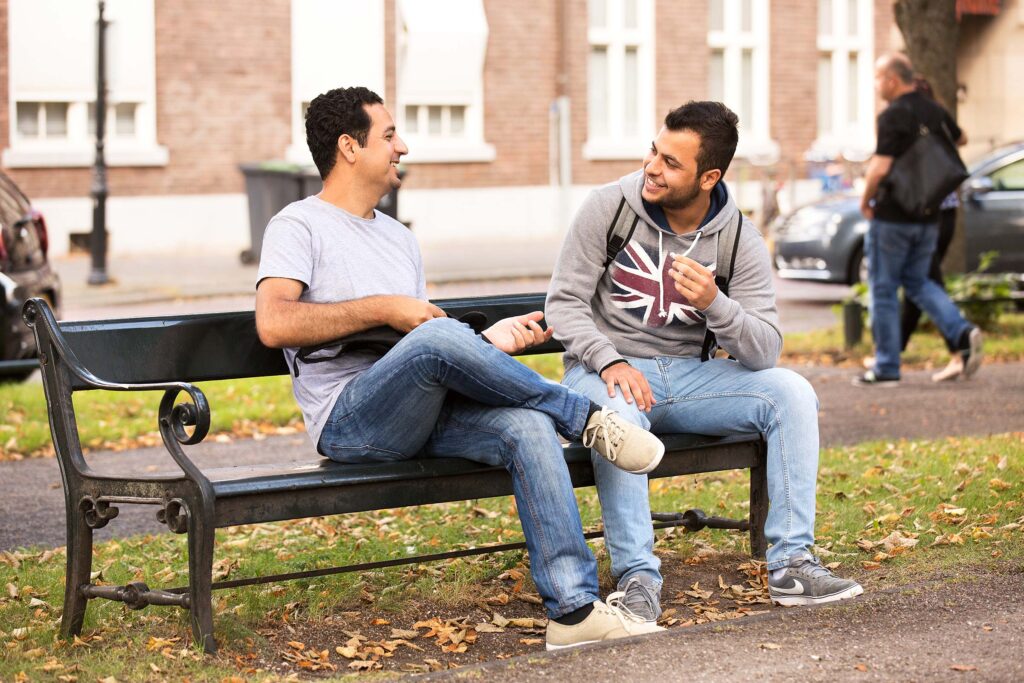


Why Do Dutch Textbooks Alone Fail?
You can’t achieve real-world fluency by just studying grammar rules and vocabulary lists in isolation. You need active practice to transform these static facts into dynamic, functional communication skills.

Finding the time to learn a new language while managing a high-pressure career is a constant challenge for busy professionals. It’ll make you feel completely overwhelmed and exhausted when you’re forced to choose between work obligations and self-study. How can structured evening courses help you maintain your career velocity while achieving genuine fluency?
Go directly to our A2 courses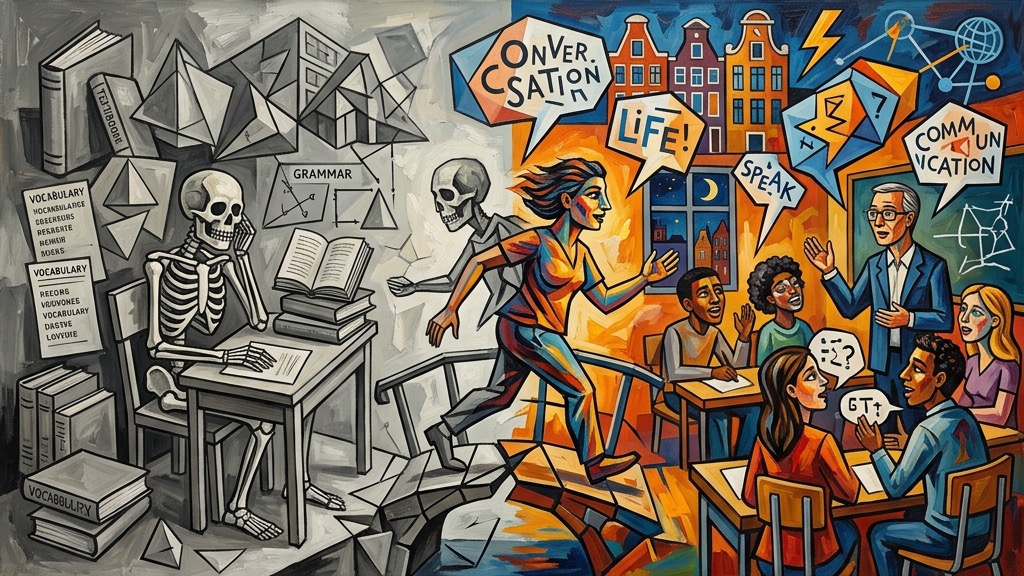
When you embark on the journey of learning a new language, you naturally start with the basics. You buy the best books for learning dutch, you download apps, and you fill notebooks with vocabulary lists. This is a necessary first step, but it is only the skeleton of your education. It provides the structure, the grammar rules, and the raw data, yet it lacks the vitality of a living language. A skeleton cannot move or breathe on its own, and in the same way, your studies cannot become a functional tool without being given life.
This is where the evening course enters the picture. It acts as the flesh and blood that covers those dry bones of theory. By walking into a room with a teacher and other students, you are forced to transition from passive consumption to active participation. You have to take the vocabulary you memorized in your room and use it to express an opinion, negotiate a point, or simply respond to a question you did not see coming. This is the moment where the language ceases to be a static concept and starts to become a part of you.
You are effectively turning abstract knowledge into actual communication. Without this transition, you are merely a collector of linguistic facts, never a user of the language. The evening course provides the environment where those facts are stress tested and integrated into your personality. It is the bridge between knowing what a word means and being able to use it with confidence when you are standing in a real world situation. You are transforming your study time into a dynamic practice.

The greatest danger for the independent learner is the feedback vacuum. When you study alone, you are the only judge of your own success. You might be pronouncing a word incorrectly or structuring your sentences in a way that sounds entirely alien to a native speaker, yet you carry on, assuming you are correct. You are essentially building a house on a foundation of sand, cementing bad habits that will be incredibly difficult to fix once you eventually reach the plateau associated with the best books for learning dutch.
An evening course shatters this isolation by providing immediate, real time correction. A teacher can hear your mistakes the moment they happen, stopping you before they become permanent fixtures in your brain. This prevents the error loop that keeps so many students stuck in the intermediate level for years. By correcting your trajectory early and often, you are ensuring that your progress is not just fast, but accurate and effective.
You can’t achieve real-world fluency by just studying grammar rules and vocabulary lists in isolation. You need active practice to transform these static facts into dynamic, functional communication skills.
Studying alone creates a feedback vacuum where you’re the only judge of your own language success. You’ll likely cement bad habits without realizing they sound completely alien to native speakers.
Classroom sessions simulate the professional Dutch environment so you can learn vital corporate etiquette and soft skills. They act as a safe training ground where you’ll build the confidence to debate, present, and negotiate.
These structured classes let you use reference books for tactical daytime study while saving the evenings for live application. You’ll maintain your professional velocity because you don’t have to pause your career to achieve fluency.

We often forget that language is a tool for social navigation. In the Dutch workplace, the ability to debate, present, and build consensus is just as important as the ability to speak clearly. An evening course is not just a lesson in grammar. It is a simulation of the professional world. You are placed in scenarios where you must advocate for your position, listen to the views of others, and find a middle ground. You are learning the social etiquette of the country alongside the vocabulary.
These classroom interactions act as a safe training ground for the high pressure environment of a real office. You learn how to be assertive without being rude and how to be polite while still being clear. This is the cultural education that most expats miss out on when they try to learn the language in total isolation. They might learn the words, but they miss the tone and the nuance that actually make a career successful in the Netherlands.
By engaging in these controlled debates and presentations, you are developing the soft skills that make you a valuable colleague. You are learning to read the room and adapt your language to the situation. It is the difference between being a person who can speak Dutch and a person who can function as a Dutch professional. You are building the confidence to handle the unpredictable nature of real business interactions.
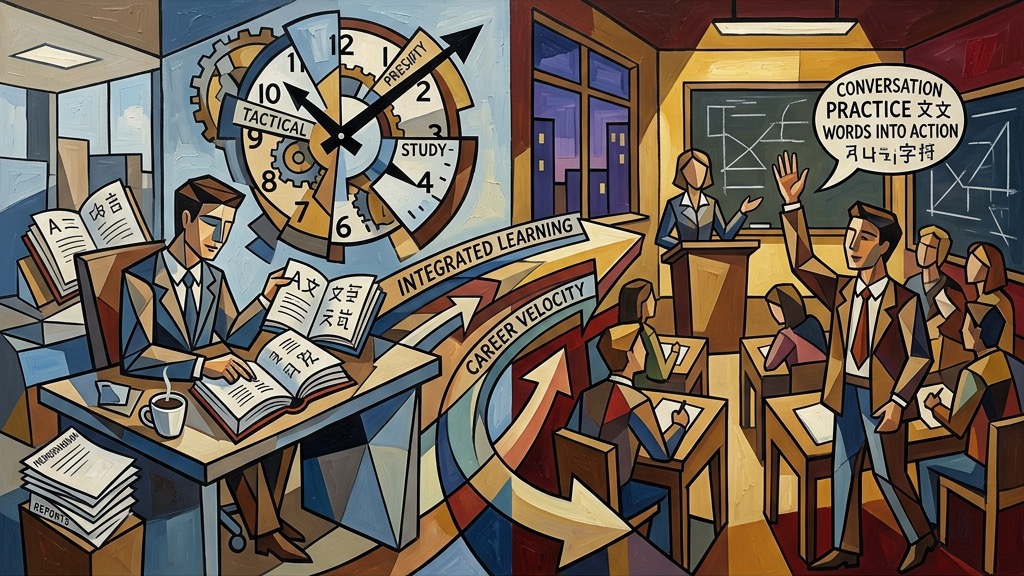
The high achiever understands that time is a finite resource that must be managed with absolute precision. You cannot afford to spend your entire day on language learning when you have a career to lead. The smart strategy is to use the best books for learning dutch as your tactical support during the day. You use them for foundational review, for checking specific grammar points, and for quiet study during your spare moments. They are your reference materials, providing the necessary prep work for your evening sessions.
You then leverage your evening course to test and challenge everything you have studied alone. You bring your questions, your newfound vocabulary, and your uncertainties into the room and put them to the test. This creates a powerful, integrated workflow. You are not just reading; you are preparing for action. The evening course becomes the main event, the place where you apply your knowledge and see immediate results. You are maintaining your velocity by ensuring that every hour you spend studying is immediately put to productive use.
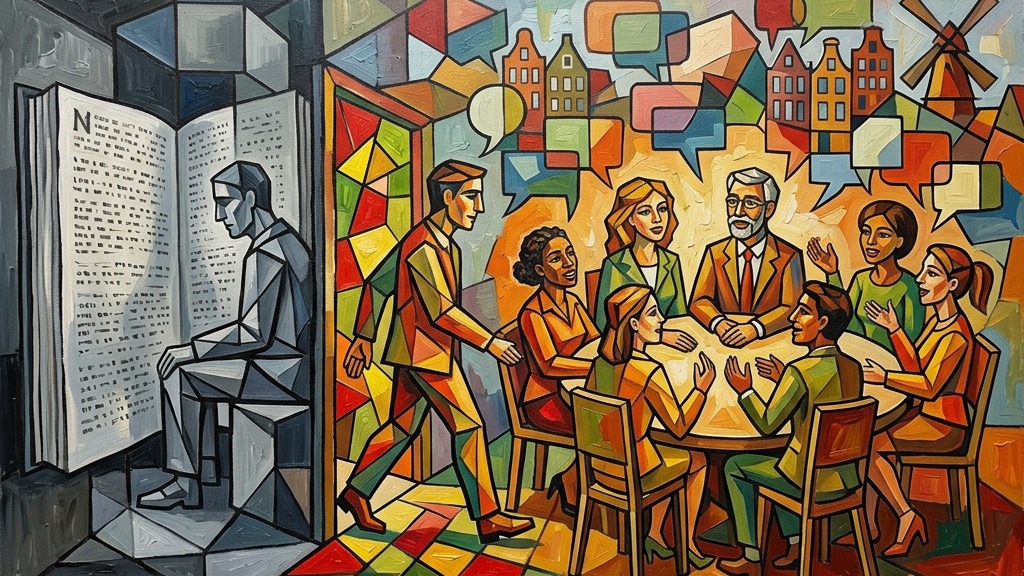
The most overlooked aspect of an evening course is the community it creates. Language is a social endeavor, and it thrives when it is shared. When you are surrounded by other ambitious professionals, you are fueled by a shared sense of purpose. You push each other, you challenge each other, and you learn from each other. The solitary act of staring at a page is replaced by the collective energy of a room full of people who are all determined to succeed.
This social element acts as a catalyst, significantly accelerating your path to fluency. You are no longer just practicing with your own thoughts. You are listening to the accents, the mistakes, and the successes of your peers. This diversity of input forces your brain to become more flexible and more capable of understanding different ways of speaking. It makes the language feel real and accessible. You are becoming part of a community of learners, which provides a level of accountability that you will never find in a book.
Ultimately, this is about reaching the level of cultural fluency that is required for long term success. You are moving beyond simple translation and into the realm of true understanding. You are learning how to live in the culture, not just how to speak about it from a distance. The evening course is the vehicle that carries you from being an outsider to being a participant. It is the essential final step in your transformation into a truly integrated member of the professional Dutch world.
Discover the Dutch Courses at Lest Best
Below, you’ll find more information about our courses to help you make the right choice.


 Utrecht
Learn how to introduce yourself, talk about your family, order something, ask how someone is doing, make an appointment, ask questions, and express positive or negative opinions.

Utrecht
You will learn how to ask and talk about past events, describe a technical problem, make small talk, describe objects and surroundings, ask for and give information.

Utrecht
In the A2–B1 course, you complete level A2 and begin working towards level B1. You will learn how to make phone calls, describe objects and events, talk about your future plans, and describe things in more detail.